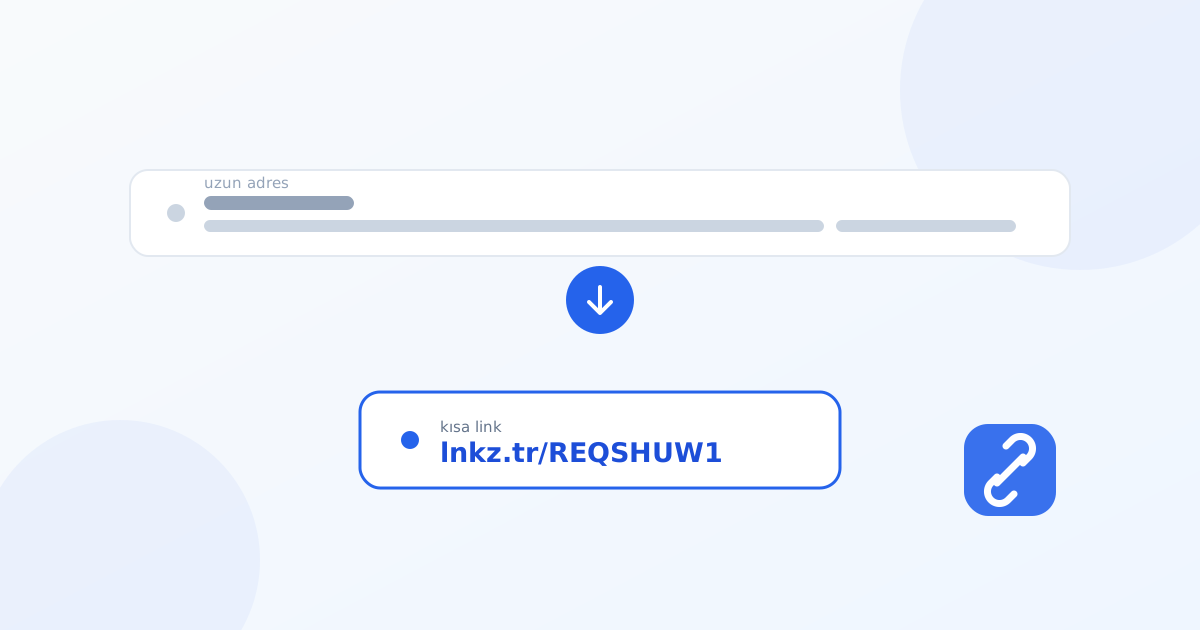
A short link is a compact address that stands in for a long web address and sends anyone who clicks it to the real destination. For example this:
https://randevu.selfklinik.com/?GUID=a8faa905-477a-11f0-89df-52e18006e243becomes this:
https://lnkz.tr/REQSHUW1Both open the same page. The difference is that the second one fits into a text message, a business card, or an Instagram bio.
What happens behind the scenes
There is no magic involved. A shortener does three things:
- Store. The long address goes into a database and gets a unique code —
REQSHUW1in our example. - Resolve. When someone opens
lnkz.tr/REQSHUW1, the server looks that code up. - Redirect. The server returns an HTTP redirect (301 or 302) with the destination. The browser follows it automatically.
The whole round trip typically finishes in under 50 milliseconds — the visitor never notices there was a step in between.
How the code is generated
Short codes are usually random, with some characters deliberately removed for readability. lnkz.tr uses uppercase letters and digits but excludes I, O and 0 — because those are constantly confused when a code is read aloud over the phone or typed by hand.
Eight characters from that alphabet yield more than a trillion combinations, so running out of codes is not a practical concern.
Why use one?
1. Character economy
SMS caps a message at 160 characters. A 90-character address eats more than half of it. A short link brings that down to about 20.
2. Measurability
Share a long address and you have no idea how many people clicked it. A short link counts every click, and records the device and referrer. Share the same campaign on three channels using three different short links and you will know which channel actually worked.
3. Error-free sharing
Reading an address with ten query parameters over the phone is close to impossible. A short link can be dictated.
4. Changing the destination later
If the address printed on a brochure is wrong, you reprint the brochure. If the brochure carries a short link, you change where that link points from the dashboard. The printed material stays the same; where it leads changes.
5. Visual tidiness
An address that wraps across three lines wrecks the layout of a slide or an email. A short link sits on one line.
The trade-offs
Short links are not free of downsides:
- Loss of transparency. Users cannot tell where they are going. This is exactly why phishing campaigns like short links too. Use a reputable service and stick to one consistent domain in corporate communication.
- Service dependency. If the shortener shuts down, the links die with it. For long-lived printed material, prefer a service tied to a domain you control.
- One extra HTTP hop. The redirect adds tens of milliseconds. Irrelevant in most cases, but worth accounting for in ad landing page optimisation.
Custom codes
Instead of a random code you can pick your own. lnkz.tr/spring-sale is memorable and gives context before the click. It also helps trust: when people can guess where a link goes, click-through rates rise.
Rule of thumb: use meaningful custom codes where humans will see them (posters, slides, email signatures); leave random codes where machines generate them (bulk SMS, API).
Expiring and limited links
A short link can do more than redirect. Set an expiry date and it stops working afterwards — when a campaign ends, the address on the old poster does not lead to a dead page but to something informative. Set a click limit and it closes after a set number of opens, which is useful for invitations with limited capacity.
Where to start
For a single address you need no account: paste it into the box on the home page and you have your link in seconds. If you want to track clicks or generate links automatically from your own system, a free account is enough.